
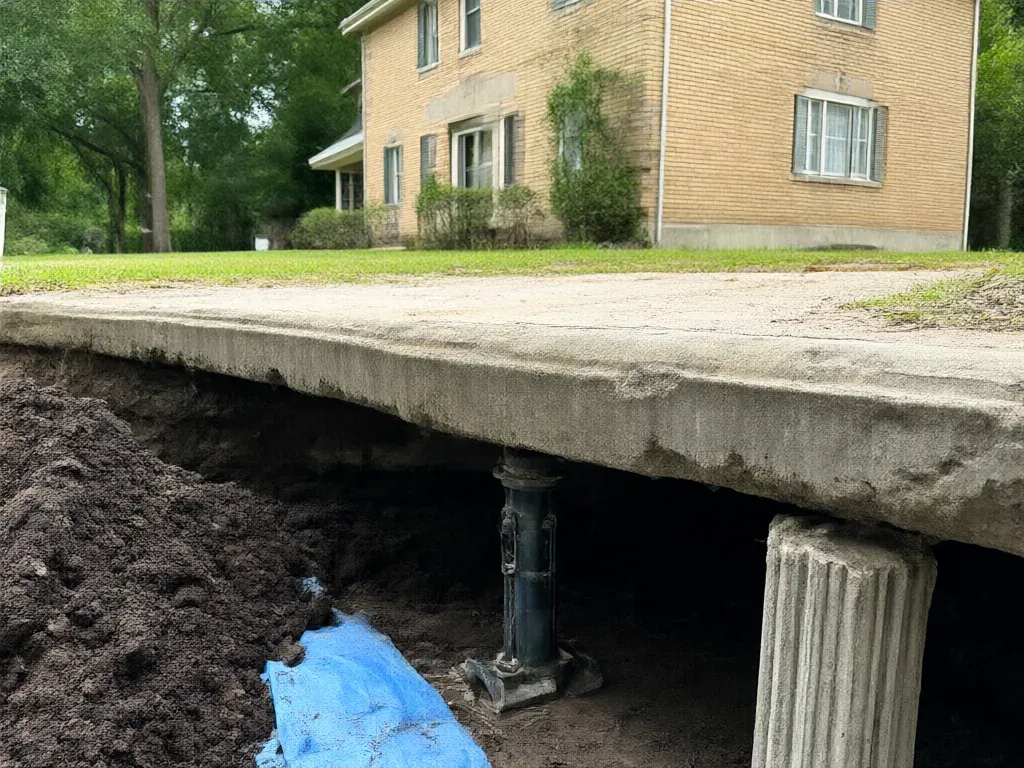
Slab Foundation Repair in Carrollton, TX
Carrollton Superior Foundation Repair offers professional slab foundation repair in Carrollton, TX with 19 years of experience and 2,900+ foundations repaired since 2007. Most of that work is slab-on-grade: post-tension slabs and conventionally reinforced slabs with a grade beam around the edge, sitting on expansive clay. We lift dropped corners and settled sections with pressed concrete pilings, drilled bell-bottom piers or steel push piers, depending on what the engineer calls for.
Slab repair isn't a crack-filling job. It's finding the section that moved, setting piers under the grade beam at 6 to 8 feet on center, and lifting it back toward level without splitting tile or drain joints. Exterior pilings run $325 to $450 per pier, and a typical job of 8 to 14 pilings comes in at $3,900 to $8,900 all-in, with the engineer, permit and plumbing test included.
Get a FREE Estimate
Or call (469) 896-0932
Slab Foundation Repair Methods
The right repair depends on where the slab moved and why. These are the five we use most.
Slab Perimeter Piering Along the Grade Beam
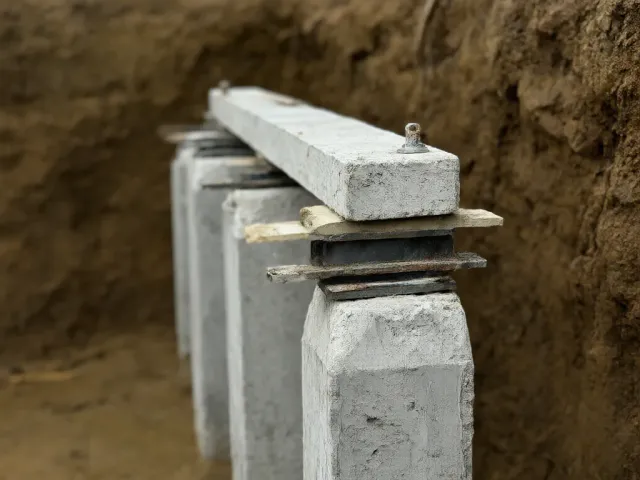
Most dropped slabs fail at the edge, where the grade beam sits in clay that dries out first. We dig an access hole at each pier location, press 6-by-12-inch pilings to refusal under the beam, set a cap block and steel shims, and lift. It's the repair behind most of our jobs, and a typical one takes 1 to 3 days.
Slab Interior Piers Through the Floor
When the low spot sits under a kitchen or a hallway, the pier has to go there too. We cut a breakout in the floor, press the piling, lift and re-pour the patch. Interior piers run $650 to $950 each, and flooring repair is priced as its own line so nothing surprises you at the end.
Post-Tension Slab Repair
A post-tension slab carries steel tendons under tension inside the concrete, and most 1970s and 1980s houses around here have one. We locate the tendons before cutting anything and keep breakouts clear of them. We also plan the lift for a stiff slab that tilts as a section instead of cracking in one spot.
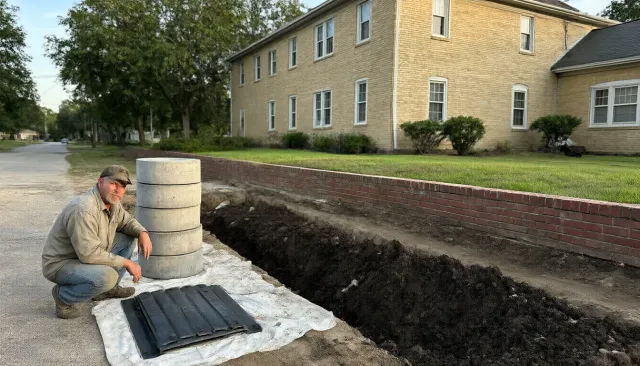
Slab Repair After an Under-Slab Plumbing Leak
A leaking drain line softens the clay from the inside, so the slab drops where no tree or downspout can explain it. We run a plumbing static test before the lift, get the leak fixed by a licensed plumber, then pier the section. Lifting over an active leak just builds the next repair.
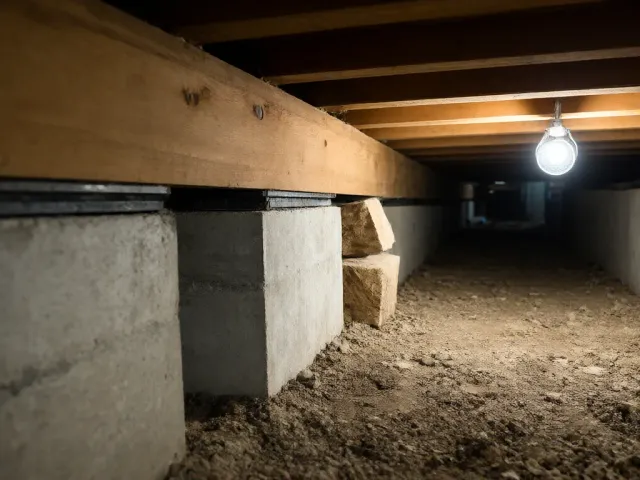
Slab Corner and Partial Repairs
Sometimes one corner really is the whole problem. If the elevation survey and the engineer agree, we pier just that section. If the survey shows the drop running down the wall, we pier the whole failing run, because too few piers on a long drop just moves the problem down the beam.
Before and After
Signs You Need Slab Foundation Repair
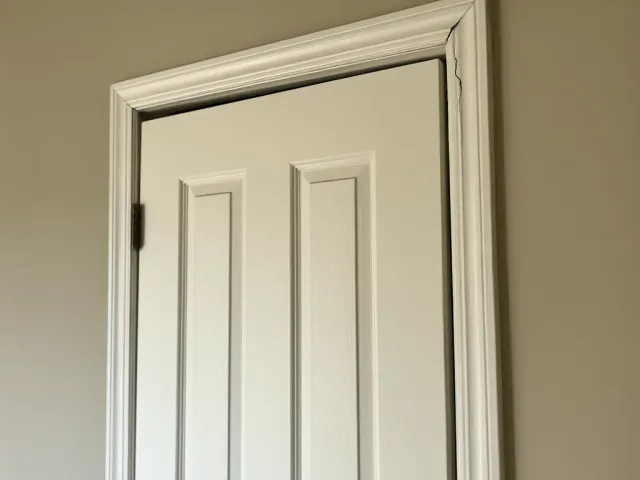
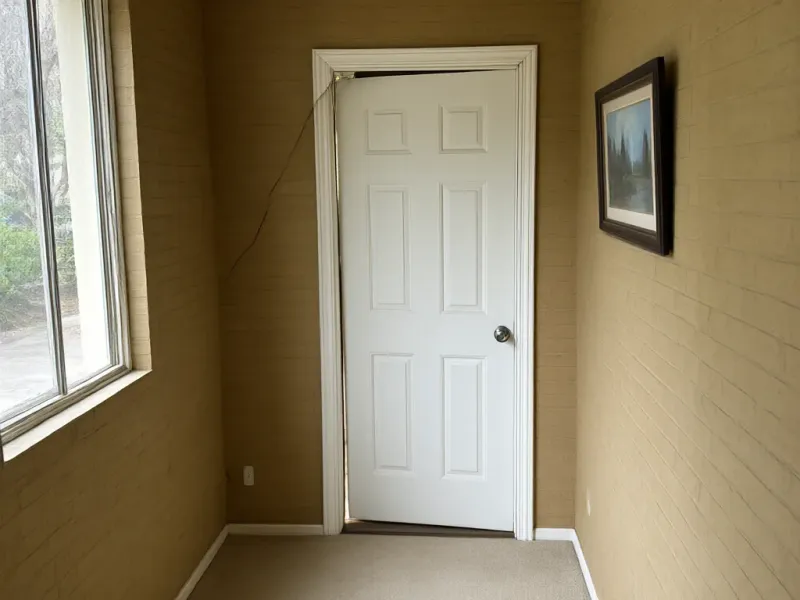
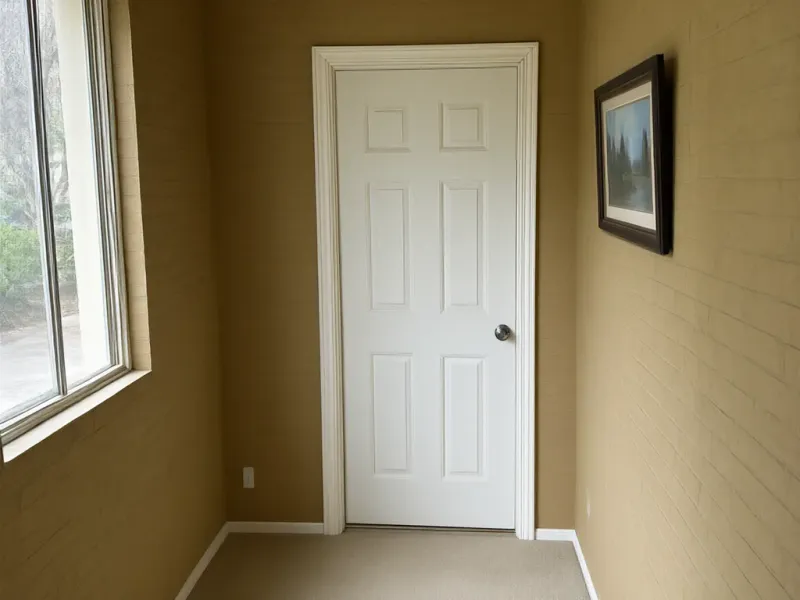
A slab tells you it moved through the house sitting on it. Doors stick or won't latch. Brick shows stair-step cracks through the mortar. Windows gap at the corners, and floor tile cracks in a line across a room.
One of those by itself usually isn't a pier job. Concrete shrinks as it cures, drywall tape cracks, and every house shifts a little between a wet spring and a dry August. When three of them show up on the same corner, that's the slab talking.
Other signs worth a free inspection: a gap opening between the brick and a window frame, baseboards pulling away from the floor, a crack wider at the top than the bottom, or a home inspection report that says 'evidence of movement'. Is the crack new, or has it been there since you moved in? That question matters, so take a dated photo with a tape measure next to it.
Slab Foundation Repair Materials and Specs
What goes under your slab decides whether the repair holds. Here's exactly what we use, so you can compare it line by line against any other bid.
Pressed Concrete Pilings
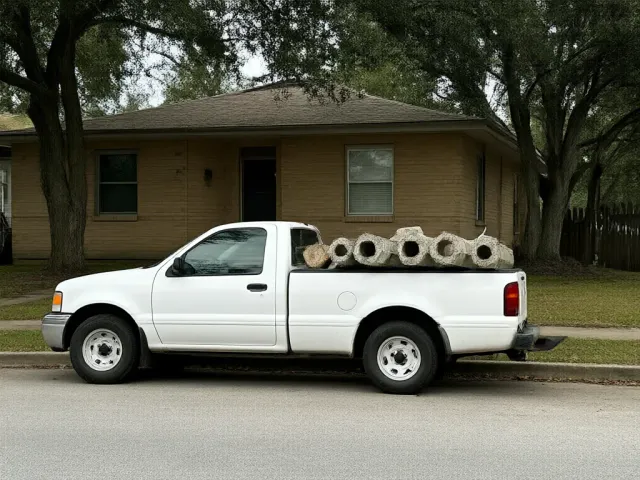
Each piling is a column of precast concrete cylinders, 6 inches by 12 inches and 5,000 PSI, driven down one cylinder at a time by a hydraulic ram until it reaches refusal. Most reach refusal between 10 and 20 feet in this area. A cap block goes on top, and steel shims close the gap to the beam.
Drilled Bell-Bottom Piers and Steel Push Piers
Where the engineer wants end bearing, we drill a 12-inch shaft 10 to 15 feet deep with a 30-inch bell, reinforced with four 1/2-inch rebar in 3,000 PSI concrete. Where a verified load matters, steel push piers drive 3-inch galvanized pipe to load-bearing strata.
They cost more, $850 to $1,250 and $1,250 to $1,900 a pier, and they earn it on heavy two-stories, additions and spots where pressed pilings can't reach a clean refusal.
Shims, Backfill and Slab Patches
Steel shims only, never wood. Pier holes get backfilled and compacted in layers so the yard doesn't sink along the wall a month later. Interior breakouts get new concrete tied into the existing slab, then the flooring goes back on top.
Why Carrollton Homeowners Call Us for Slab Repair
Carrollton grew from 13,855 people in 1970 to 40,595 in 1980, and the west side of the city sits on clay weathered from Eagle Ford shale. That adds up to a lot of post-tension slabs that have been through decades of the same wet-dry cycle. We've spent 19 years learning how those houses move, corner by corner.
The City of Carrollton requires a permit for every foundation repair, with an engineer-designed pier plan and a final inspection. We file the permit, schedule the independent engineer and pass both costs through at the city's and the engineer's price. You keep the paperwork for the day you sell.
Every pier we install carries a lifetime transferable warranty, and every lift gets one free adjustment in the first 24 months while the clay settles in around the new piers. If a piered section settles after that, we re-lift it at no charge.
Our Slab Foundation Repair Process
Shoot the floor
A free inspection within 2 business days. We take 40 to 80 manometer readings and mark the low sections on a floor plan.
Pier plan and engineer
You get a written pier plan within 24 hours. An independent engineer licensed in Texas reviews the house and seals the repair letter.
Permit and plumbing baseline
We file the city permit, and a licensed plumber static-tests the drains so we know they hold water before anything gets lifted.
Dig, press and lift
The crew presses pilings to refusal along the beam and lifts in small increments while we watch the manometer and the drywall.
Retest, backfill and final
The plumber retests, we backfill and compact the holes, the city inspects, and you get the elevations, permit record and warranty.
Slab Foundation Repair Questions
How many piers does a slab repair usually need?
It depends on how much of the beam moved. A single dropped corner needs fewer, but most of our slab jobs land between 8 and 14 exterior pilings at 6 to 8 feet on center. The elevation survey and the engineer set the count, not a sales sheet.
Can you lift my slab back to perfectly level?
Usually not all the way, and you shouldn't want that. A slab that's been low for years has drywall, tile and plumbing that settled with it. We bring it up to the engineer's target, then stop before the walls and tile start to complain.
Will you have to break up my floors?
Only if the low spot is in the middle of the house. Most slab repairs are dug along the grade beam from outside. When we do go inside, we locate post-tension tendons first, and the breakout and flooring show as separate lines on the quote.
What if the slab moved because of a plumbing leak?
Then the leak gets fixed first. The static test before the lift tells us whether the drains hold water. If they don't, a licensed plumber repairs the line before we pier, or the clay under that section just goes soft again.
Are pressed pilings as good as steel piers?
For most slabs here, pressed concrete pilings do the job at $325 to $450 a pier. Steel push piers at $1,250 to $1,900 make sense when the engineer needs a verified load or pressed pilings can't reach a clean refusal. We'll tell you which one your house needs and why.
Get a Free Slab Foundation Inspection in Carrollton
Call (469) 896-0932 or send the form. We'll shoot the floor, find the section that moved and email you a written pier plan within 24 hours.