
Foundation Crack Repair in Carrollton, TX
Carrollton Superior Foundation Repair offers professional foundation crack repair in Carrollton, TX with 19 years of reading cracks and 2,900+ foundations repaired since 2007. We repair slab cracks, stair-step cracks in brick veneer, cracks at window and door frames, and broken mortar joints. Crack injection runs $450 to $750 per crack, and brick mortar repair runs $350 to $950 per area.
A foundation crack is a symptom, and sometimes it's the whole story. We start with a free elevation survey, usually 40 to 80 manometer readings, to see whether the slab is actually moving. If it isn't, we seal the crack with epoxy or polyurethane injection and repoint the brick. If it is, we tell you, because patching a crack over a dropping corner just buys you a new crack next summer.
Get a FREE Estimate
Or call (469) 896-0932
Foundation Crack Repair Types
Cracks show up in brick, in concrete and inside the house. Each one gets a different repair, and some of them get no repair at all until the slab is stable.
Stair-Step Brick Cracks
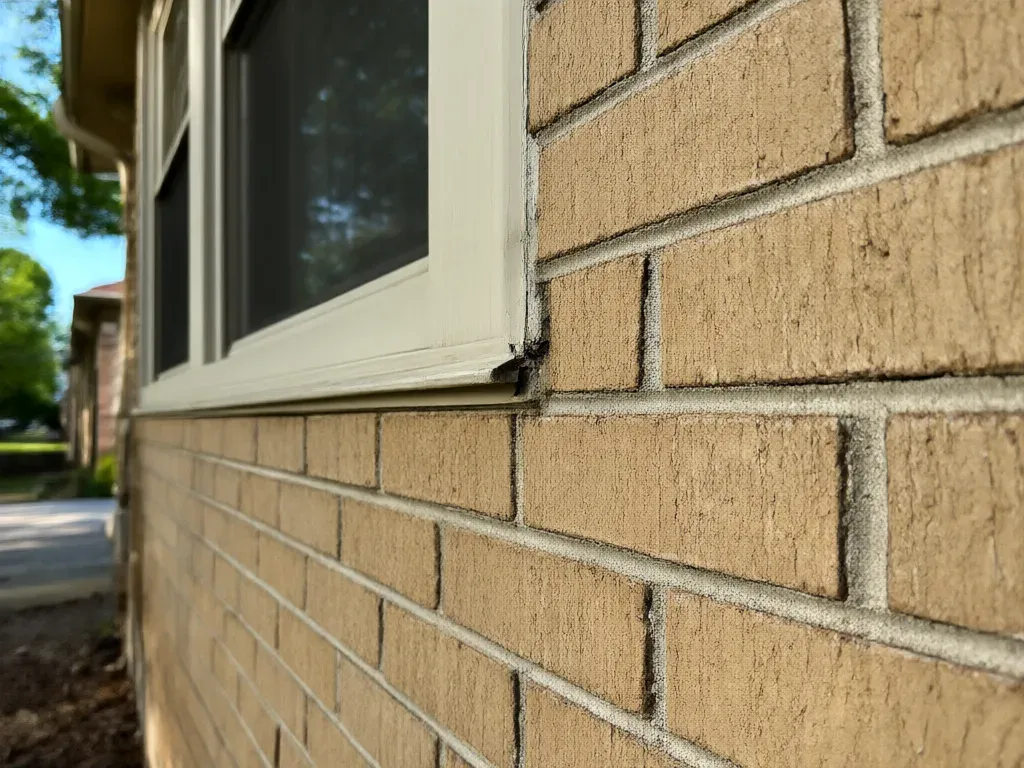
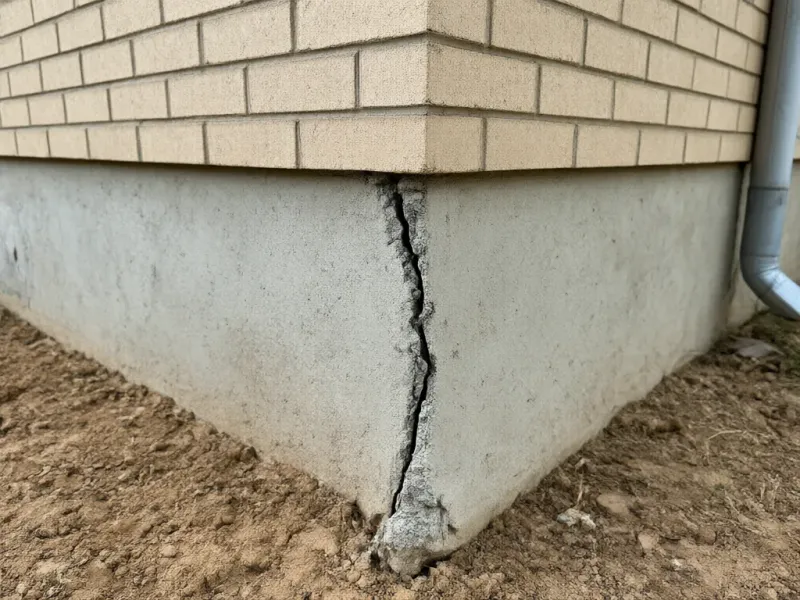
A crack that climbs the mortar joints in steps, usually from a window corner or the top of the slab, is the most common call we get. It means the brick veneer moved, and brick veneer rides on the grade beam. We repoint the joints at $350 to $950 per area, once the survey tells us whether the beam has stopped moving.
Slab Foundation Cracks
Cracks across a garage floor or the exposed slab edge come in two kinds. Hairline shrinkage cracks with no offset are just concrete that cured. Cracks with one side higher than the other, or wider at one end than the other, are movement. We inject the first kind and investigate the second.
Epoxy Crack Injection
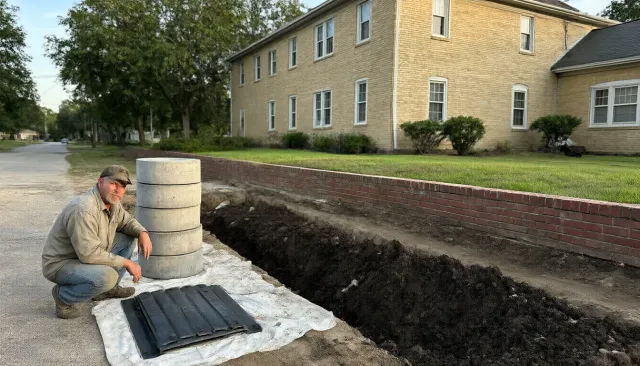
Epoxy is for dry, structural cracks where we want the concrete bonded back together. Ports go in along the crack, the face gets sealed, and two-part epoxy is pumped in at low pressure until it shows at the next port up. Once cured, it ties the two faces of the crack back into one piece.
Polyurethane Crack Injection
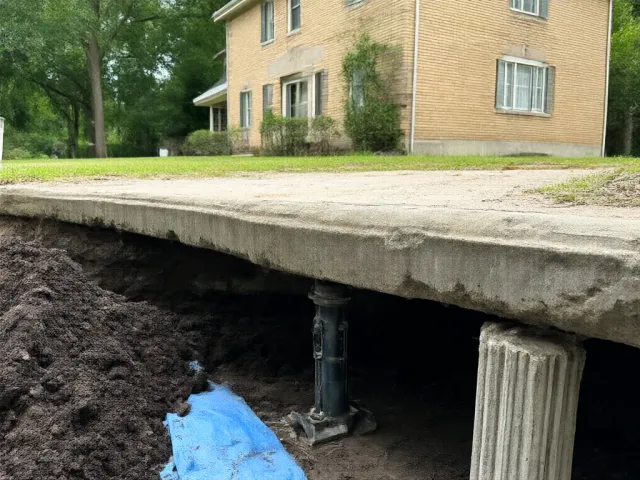
Use polyurethane for cracks that seep or leak. The resin foams when it hits moisture, fills the gap, and stays flexible when the concrete moves. It isn't for adding strength, so we don't use it on structural cracks.
Drywall and Door Frame Cracks
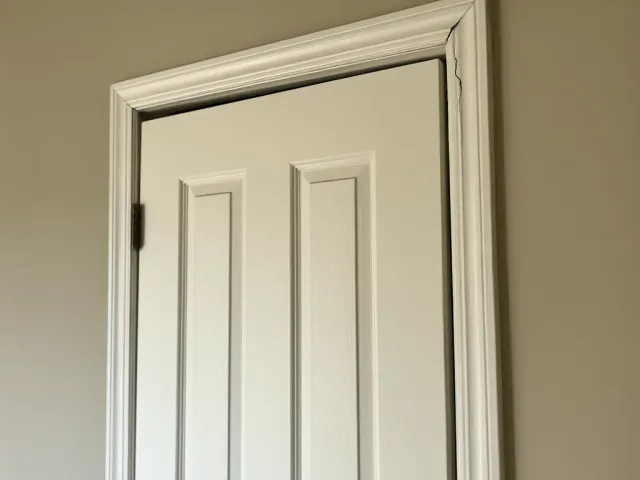
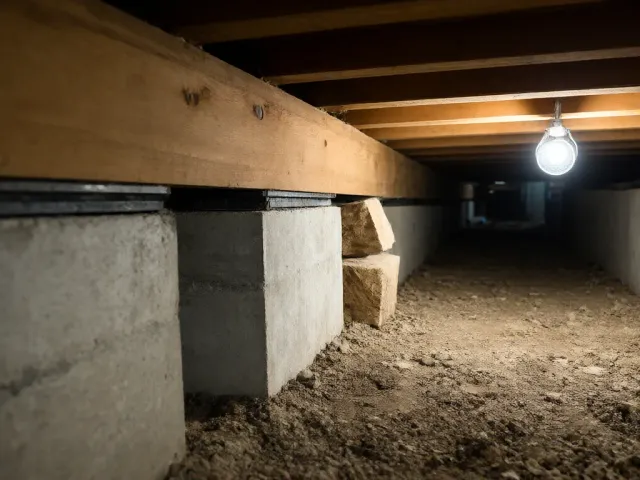
Diagonal drywall cracks off the corners of doors and windows, and doors that stick or show a wedge-shaped gap at the top, are the inside version of the same movement. Drywall patching comes last, after the slab is stable. Most homeowners hand that part to their painter once we're done.
Foundation Crack Monitoring
Not sure a crack is growing? Take a photo with a tape measure held next to it, write the date on a piece of tape beside it, and check it again in 6 months. If it opened, call us. If it didn't, it's probably shrinkage, and you've saved yourself a phone call.
Before and After
Cosmetic Crack or Movement Crack?
Most people who call us about a crack want one answer: is this serious? We sort cracks into two piles before anyone says the word pier. Here's roughly how the piles look.
Usually Cosmetic
A single hairline crack with no offset. No sticking doors nearby, no gap at the window frames, no tile cracking in a line across the floor. Concrete shrinks as it cures, and mortar and drywall have their own small seasonal movement. Photo it, date it, and look again in 6 months.
Usually Movement
A crack that's wider at one end, or with one side sitting higher than the other. A stair-step crack plus a sticking door plus a window gap, all on the same corner of the house. A crack that reopens after you patch it. Three of those together is the slab telling you something, and that's an inspection, not a tube of caulk.
When a Crack Is a Pier Job
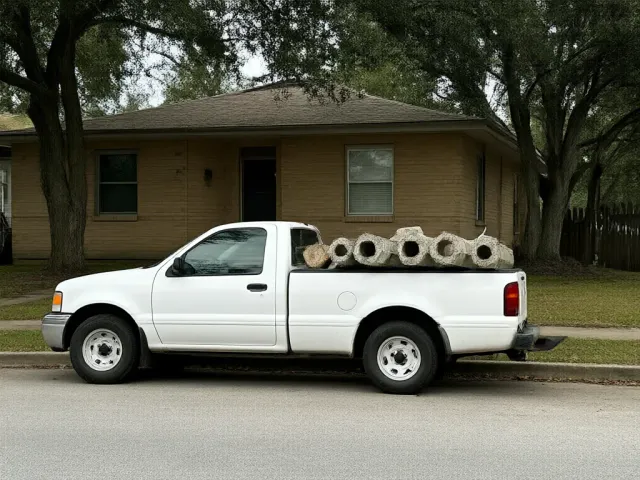
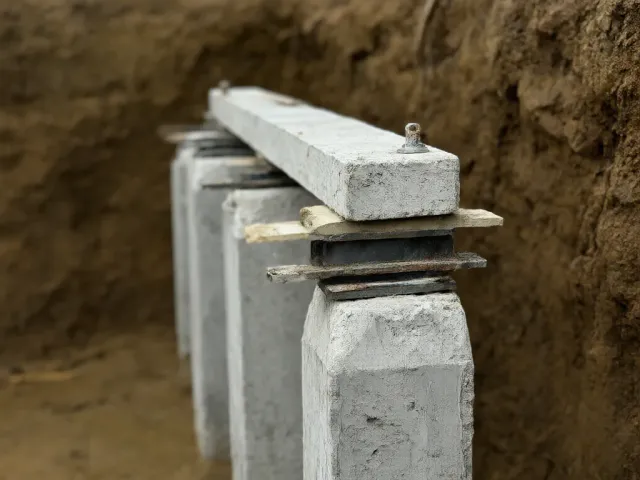
If the survey shows a corner or a section that dropped, the crack gets repaired after the lift, not before. Pressed concrete pilings run $325 to $450 a pier, built from an independent engineer's letter, and the City of Carrollton requires a permit with a PE-designed pier plan for every foundation repair. Once the slab is back where the engineer wants it, we repoint the brick and inject what's left. Crack repair before piering is money spent twice.
Foundation Crack Repair Materials and Warranty
We use two-part epoxy for structural bonds and polyurethane for leaks. We set ports along the crack and seal the surface with paste. We inject resin from the bottom port up so air can escape. Once the resin shows at the top port, the crack is full.
Mortar repair means raking out the cracked joints and repointing with mortar mixed to match the color and texture of what's there. Broken brick gets replaced. On older brick we can get close on color, but we won't promise a perfect match on brick that's been in the sun for decades, and we'll tell you that before we start.
Injected cracks come with a 5-year no-leak warranty. Mortar repair is cosmetic and only lasts as long as the slab stays put. We check the slab first because we'd rather fix the source than just the surface.
Why a Foundation Contractor Should Look at the Crack
A handyman can caulk a crack, which works fine for shrinkage. The problem is caulking a crack over a corner that is still dropping. It hides the movement and lets the slab keep sinking until your doors won't close.
Sometimes you don't need piers or injection. One couple called us about a stair-step crack near their garage after a contractor insisted on a full pier job. Our readings showed everything was normal except under a downspout dumping water against the slab. We did a $480 downspout tie-in, fixed the grade, and did a mortar repair. They didn't need piers at all.
We carry general liability at $1 million per occurrence and $2 million aggregate, and workers' comp on every employee. Texas has no statewide foundation contractor license, so if your crack turns into pier work, ask for the permit, the engineer's letter and proof of insurance from whoever you hire. We have all three before we dig.
Have a Foundation Crack Checked for Free
Call (469) 896-0932, Mon-Fri 7:30am-6pm. We'll shoot the floor within 2 business days, tell you which pile your crack belongs in, and put any price in writing within 24 hours.